
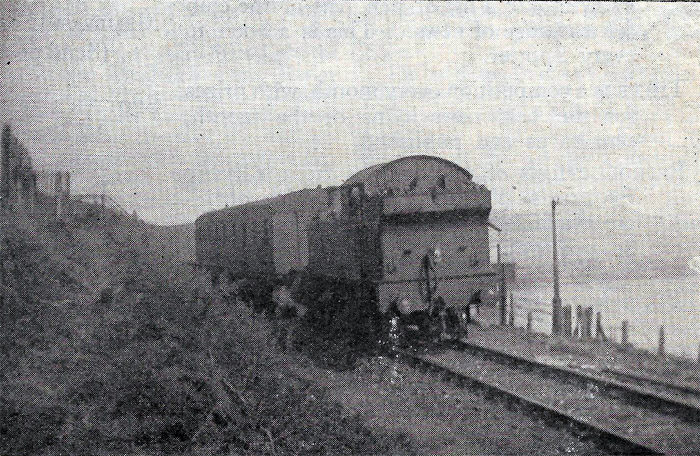
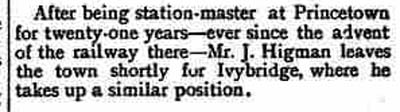

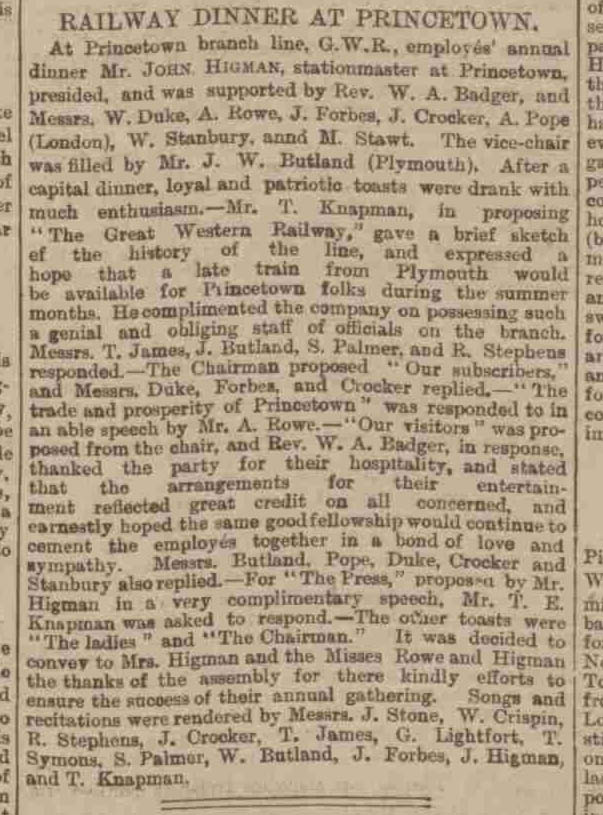
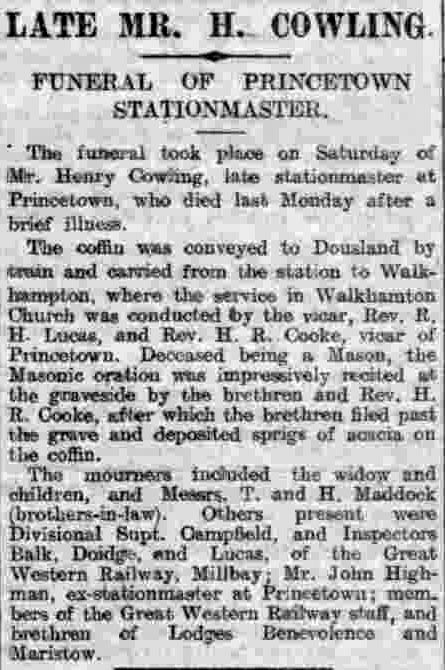

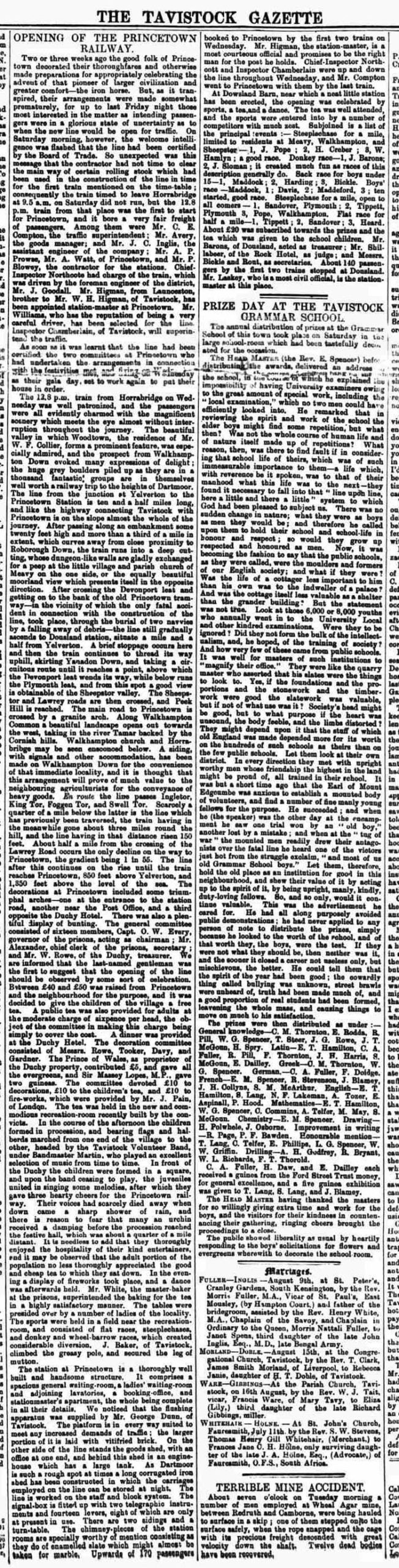
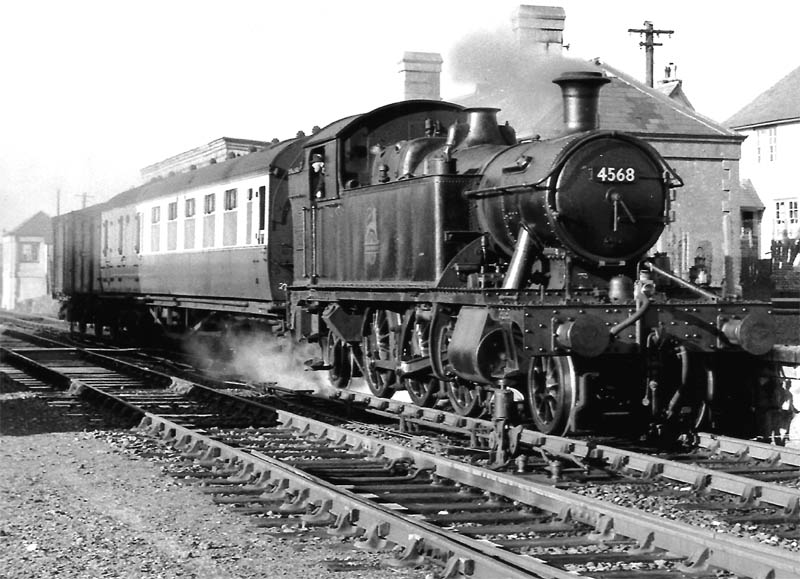
The Princetown Railway was a single track branch line in Devon, South West England, operated between Yelverton to Princetown.
Through available public archive and print news coverage, these pages look at the history, development and running of services. With news articles we discover how life was for those who worked and lived on this West Devon, Dartmoor line – the dramatic weather, the bleakness and beauty, daily life, the inclusion of the prison, the fight to keep it and the community as a whole from the 1800’s until the end of the line in the mid 1950’s.
Introduction
Part 1: The Early History of the Princetown Railway
Part 2: The Second Railway to Princetown
Part 3: Absorption by Great Western Railway and the Impact of Nationalisation
Part 4: The Closure and Legacy of the Princetown Railway
Final Conclusion
In Brief
The Princetown Branch was most famous for its striking moorland landscapes, though it also had a reputation for being unprofitable. The concept of a railway from Plymouth to Princetown dates back to 1818, with the aim of opening up the rugged Dartmoor region. By 1823, the Plymouth & Dartmoor Railway had reached Kings Tor, and two years later, the line was completed to Princetown. The railway primarily transported granite and other minerals from the moor, while coal, lime, timber, and supplies for the prison made the return journey.
As freight traffic diminished over time, only the southern section of the line remained operational, primarily serving the china clay industry from Lee Moor. In 1883, the Yelverton-to-Princetown section was replaced by the Princetown Railway, operated by the Great Western Railway (GWR). However, the Princetown Railway wasn’t officially part of GWR until 1922. Prior to the construction of Yelverton Station in 1885, trains operated to and from Horrabridge on the Plymouth-to-Launceston railway, which was itself a branch line.
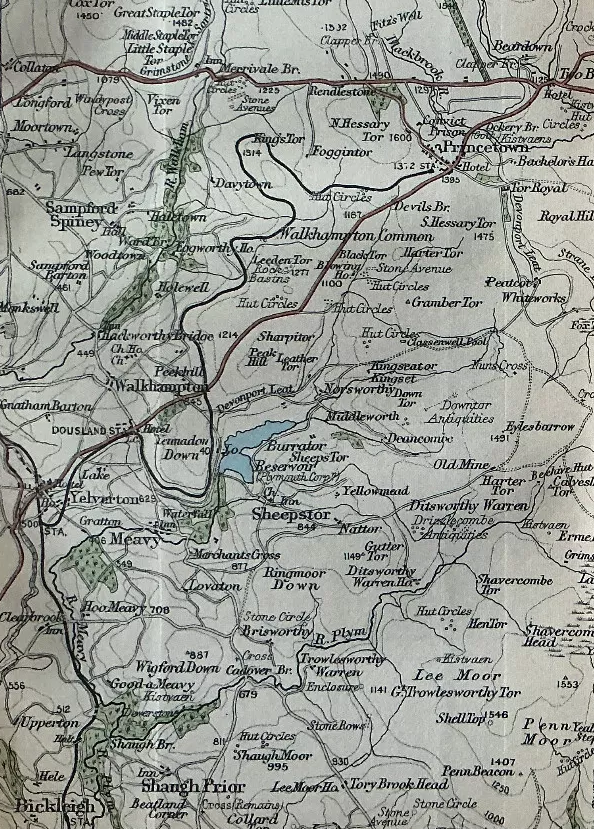
The ten-and-a-half-mile stretch of railway between Yelverton and Princetown traversed the rugged terrain, negotiating tors that made the direct route of only six miles by air a much longer journey on foot. The journey was both spectacular and unique, taking passengers to an elevation of 1,373 feet at Princetown, making it the highest station in England. With a steep gradient of 1 in 40, the railway’s route closely followed that of its predecessor.
The branch line struggled to survive due to the sparse population it served. After the granite quarries shut down in the early 1920s, GWR sought to boost passenger numbers by opening halts at Burrator and King Tor. A third halt, Ingra Tor, followed in 1936. These halts were designed to attract hikers and families looking for a picnic on the moor, but the railway’s primary passengers remained schoolchildren and commuters travelling to Tavistock and Plymouth. Uniquely, convicts were also frequent travellers, escorted by warders as they moved to and from the prison.
During particularly harsh winters, the railway was Princetown’s only link to the outside world, as roads were often blocked by snow. In these times, freight—especially food and fuel—became the main concern rather than passengers, ensuring that the town, prison, and livestock on the moor were supplied with essentials.
The increasing costs of running the railway, coupled with competition from road transport, led to the line’s closure long before the infamous Beeching cuts. The first signs of impending closure were evident as early as 1954, and despite protests from various groups, the line finally closed in March 1956. On the final day, hundreds of curious onlookers made the journey one last time, marking the end of 73 years of railway service to Princetown and 133 years of local railway history.
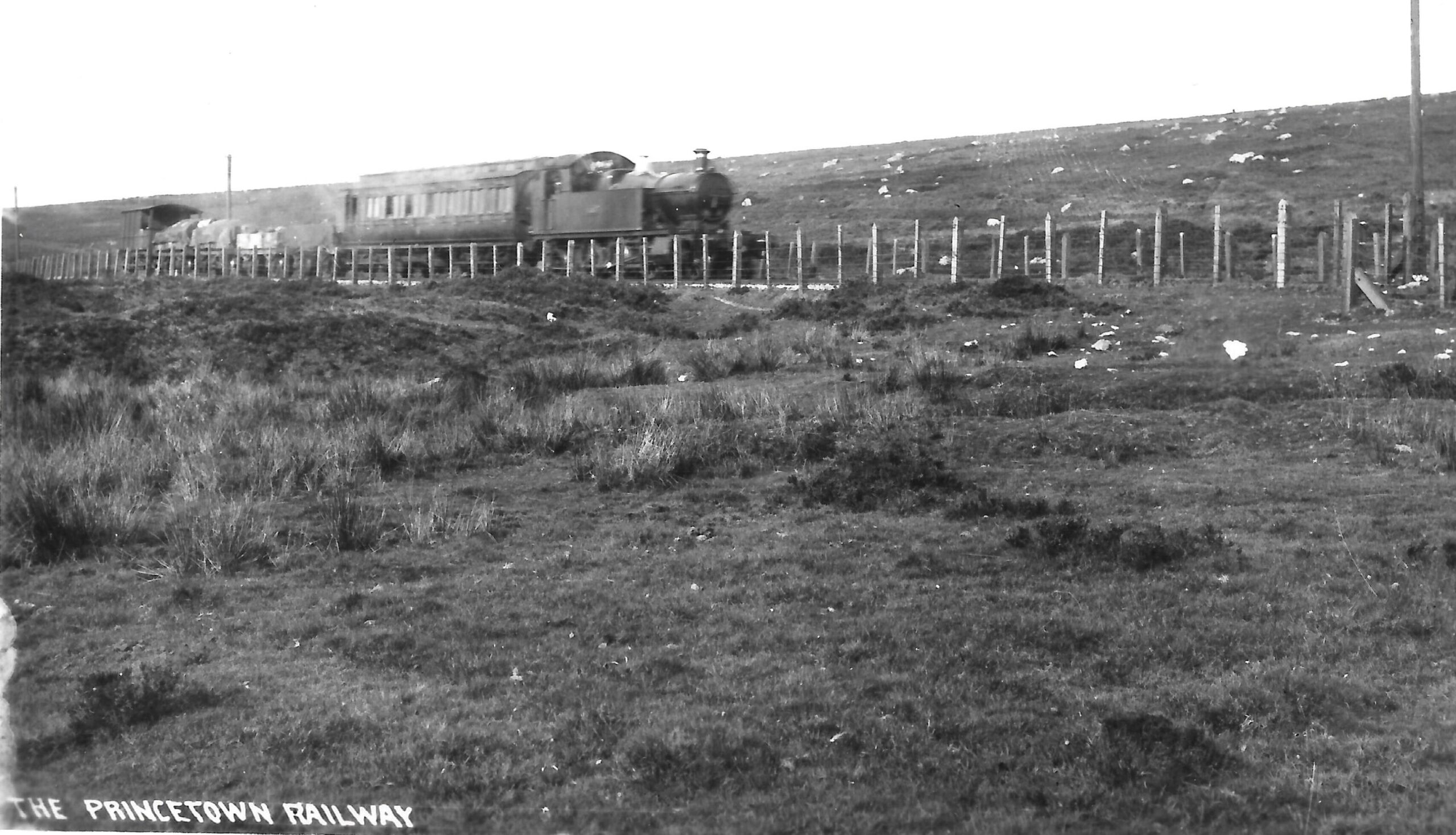
Though local and national newspapers covered the closure extensively, the Princetown Railway never became a privately preserved steam railway, as some had hoped. There was an attempt to raise funds to buy the line in 1956, but it failed due to a lack of support. The public had yet to fully appreciate the loss of their railways, and it would take years for the preservation movement to gain momentum.
One might reflect on the fact that with more railway closures still occurring today, much of the Princetown trackbed remains intact between Peek Hill and Princetown. Perhaps, with sufficient funding, there may still be a future for this scenic route.
Part 1: The Early History of the Princetown Railway
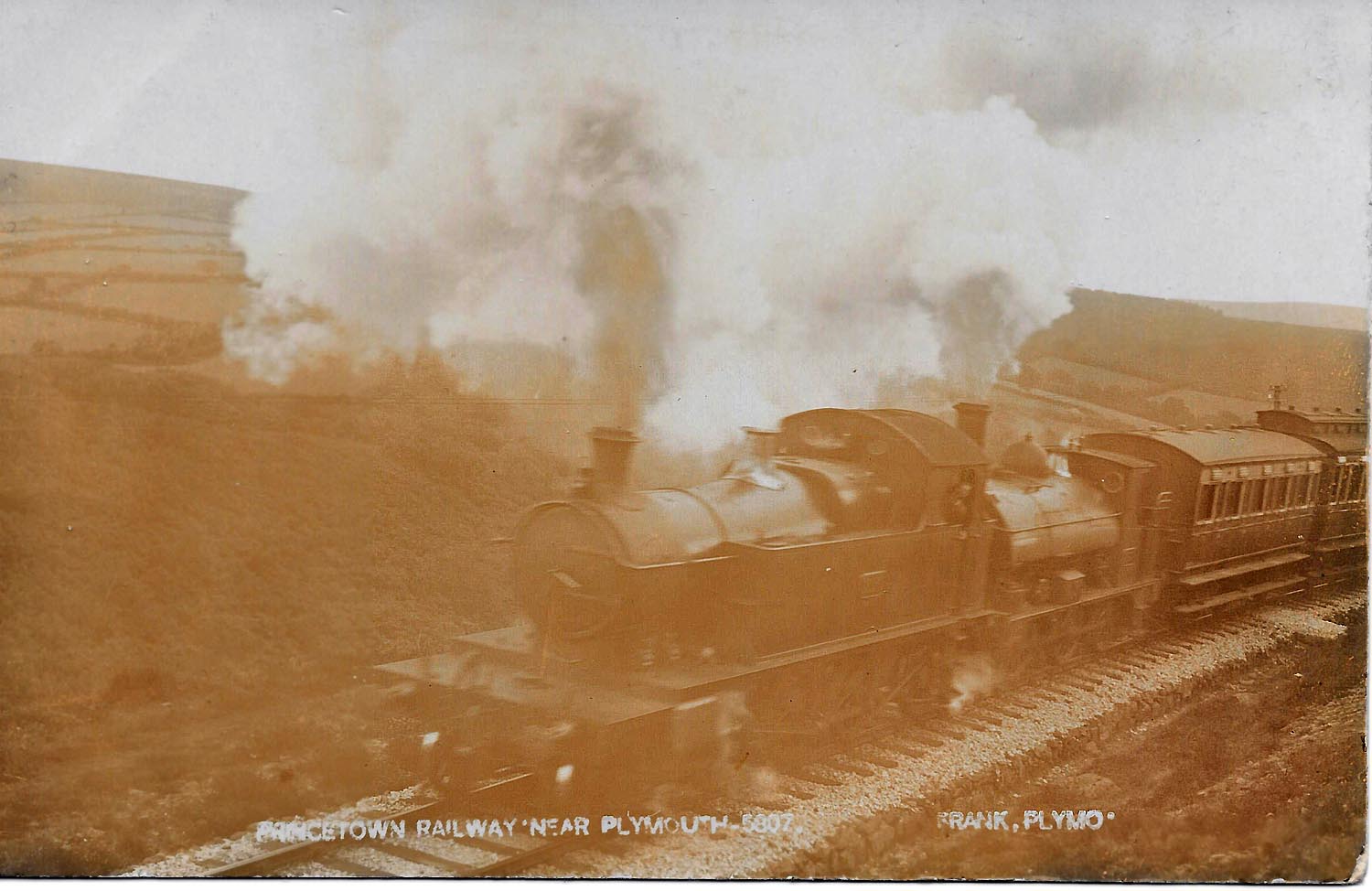
The origins of the Princetown Branch lay in the early 19th century, when industrial expansion and Dartmoor’s granite industry called for better transport links. The Plymouth & Dartmoor Railway, completed in 1825, primarily carried stone, coal, lime, timber and prison supplies. By 1883, the Princetown Railway was formally established, continuing much of the earlier route and laying the foundation for the line’s later operation under the Great Western Railway.
Part 2: The Second Railway to Princetown
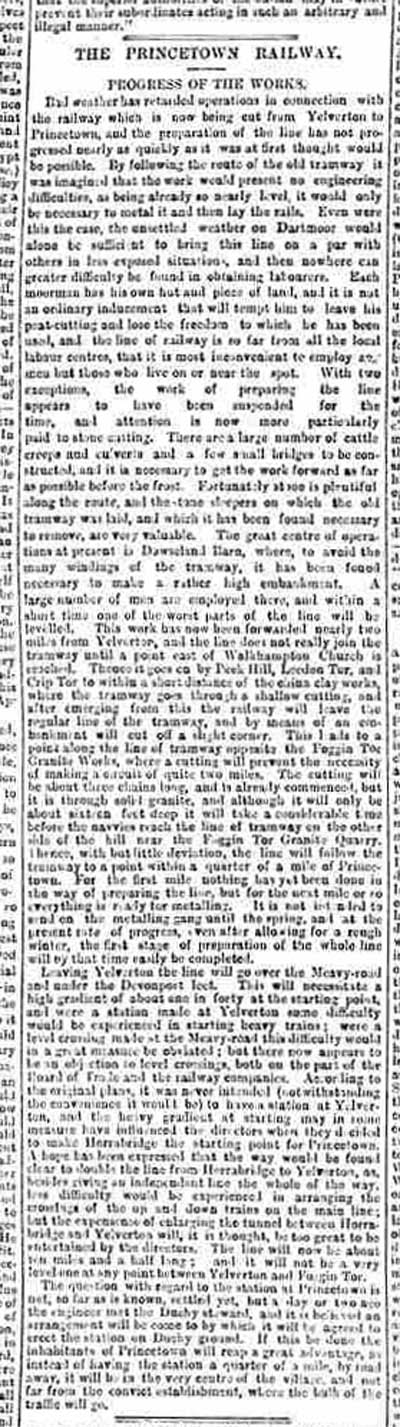
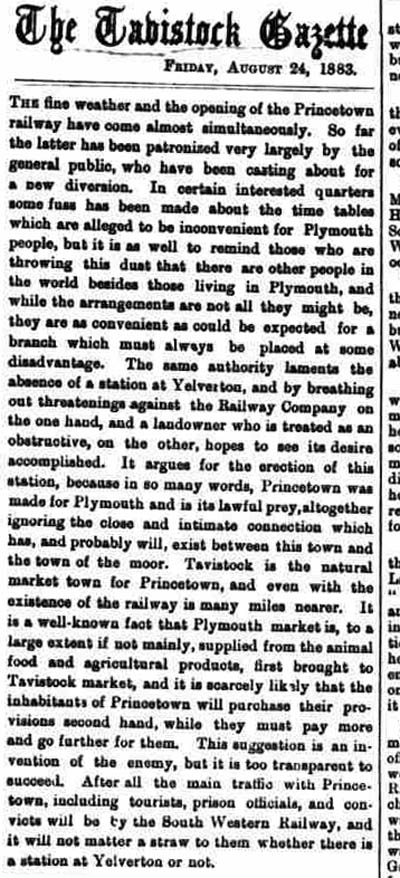
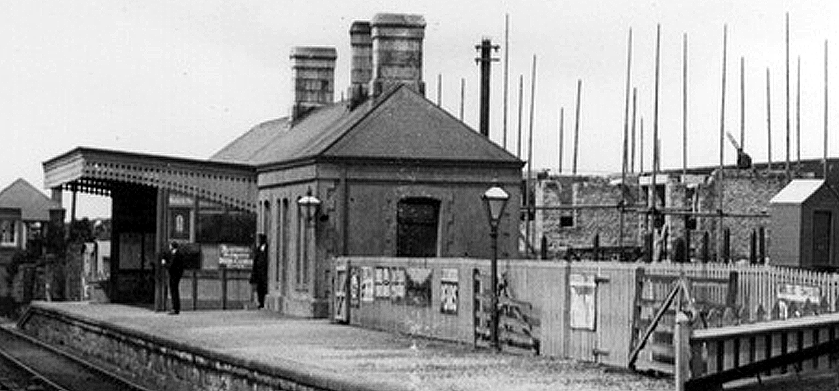
On 11th August 1883, Princetown finally gained a railway that connected it not only to Plymouth but to the entire country. Trains initially linked up with the Tavistock branch at Yelverton Junction, although passengers could only board or disembark at Horrabridge, as Yelverton didn’t yet have its own station. At the time, local residents of Yelverton were opposed to having any goods yard or station nearby, fearing it would lower the area’s status.
This situation changed after two years of negotiation, and by 1885 a station was constructed at Yelverton, serving trains on both the Tavistock and Launceston line and the Princetown railway. Yelverton station officially opened on 1st May of that year, and the initial service offered four trains in each direction daily on weekdays. By 1887, the schedule expanded to five trains a day, with extra services on Mondays, Wednesdays, and Saturdays, plus two trains running on Sundays.
In the early years, much of the railway’s traffic was freight, transporting goods for the town and prison, as well as granite from nearby quarries. Prisoners often travelled in special compartments, separated from the growing number of regular passengers.
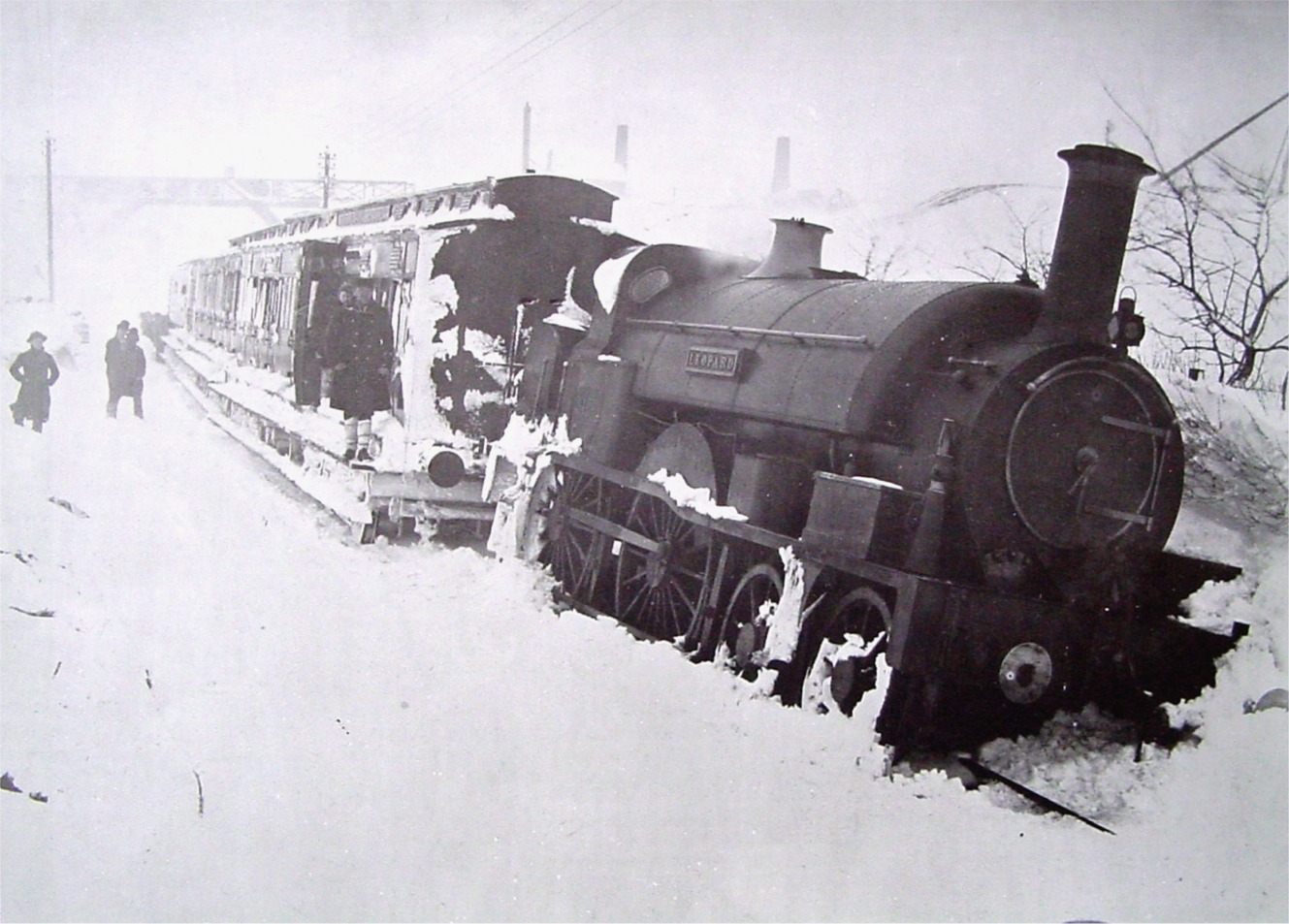
Winter on Dartmoor was always challenging, with frequent snowstorms affecting the higher parts of Devon. In 1891, the region experienced its worst blizzard in living memory. The storm was particularly harsh on Princetown due to its elevation. On 9th March, a train from Princetown became stuck in a snowdrift near Eggworthy Cutting, with six passengers aboard. Despite attempts to free the train, the passengers were stranded overnight, enduring intense cold until they were finally reached by three railwaymen the following day. It wasn’t until eight days later that the train was finally freed.
By 1893, work on the Burrator Reservoir began, providing the railway with increased passenger traffic, mainly from workers employed on the project. Although the granite for the dam was quarried locally, the railway still benefited from the influx of workers into the area. Over time, the line’s growing popularity with both locals and visitors was established, though freight traffic, especially granite, continued to play a significant role.
Part 3: Absorption by Great Western Railway and the Impact of Nationalisation
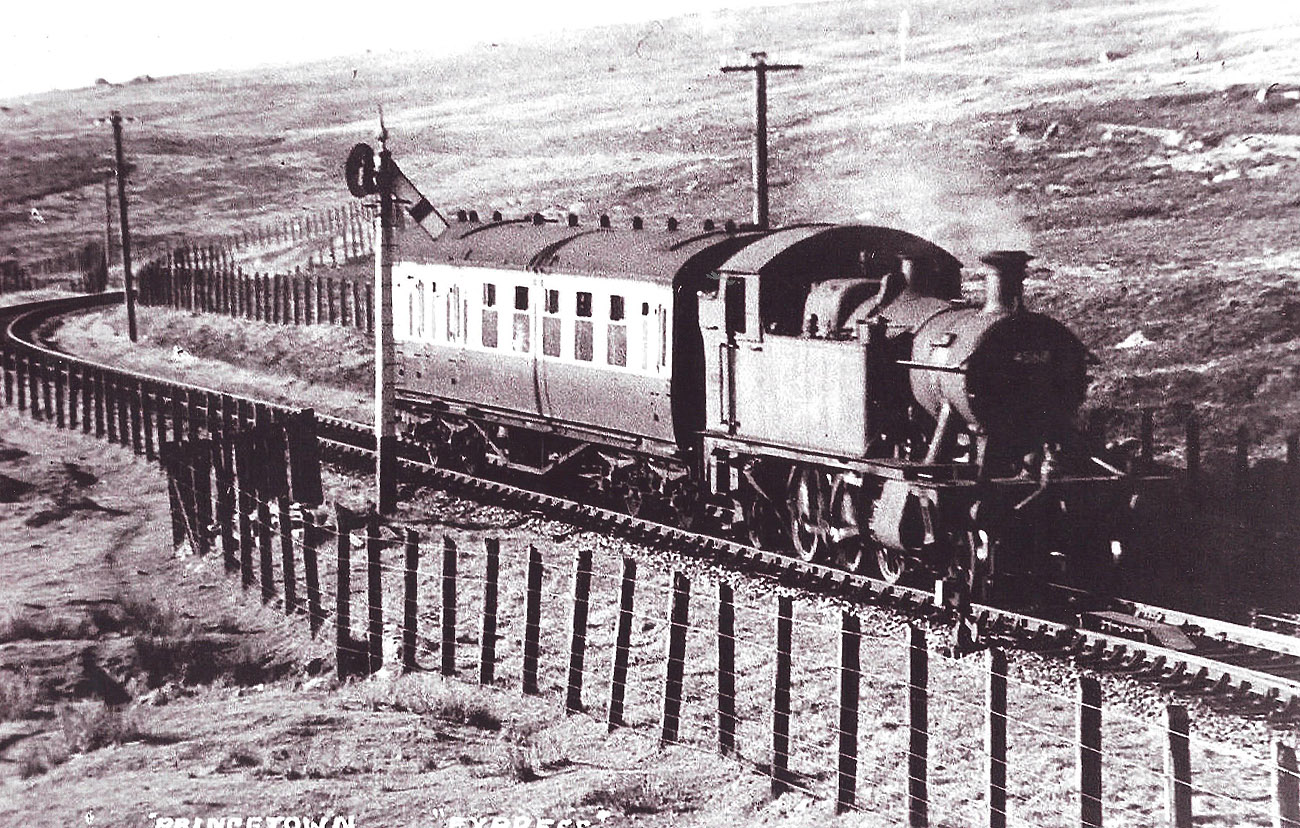
By 1922, the Princetown Railway became part of the Great Western Railway (GWR), in line with the Railways Act of 1921, which consolidated numerous smaller railway companies into the “Big Four”. This formal absorption was a direct result of growing financial difficulties for many independent railways, including Princetown.
At the time, bus services in Devon were gaining popularity, particularly with Devon Motor Transport, which had established routes between major towns, including Princetown. In response to this growing competition, GWR began its own bus services, but the railway’s fate was sealed by the new economic realities and the rapid development of road transport.
In the years that followed, Princetown experienced a short-lived boom in passenger traffic during the outbreak of World War II. During the war, the railway became an essential lifeline for Princetown, as road conditions deteriorated and resources were stretched. However, post-war Britain saw a decline in rail traffic, as road transport became even more dominant.
The nationalisation of British railways in 1948 was the final chapter in the history of the Princetown Branch. While under British Railways (Western Region), the line struggled to remain operational. By 1954, talks of closure had begun, and despite various protests from locals, the closure was announced for 1956. On 3rd March 1956, the last train ran along the Princetown line, carrying hundreds of passengers making a final, nostalgic journey.
Part 4: The Closure and Legacy of the Princetown Railway
Following closure, demolition began in 1957: tracks, signals and crossings were removed, and the branch quickly fell silent. Some remnants—platform edges, signage and the famous “snake notice” near Ingra Tor—lingered for years, weathering slowly on the moor.
There was a 1956 initiative to preserve the line privately, but support proved insufficient and the nascent preservation movement was not yet equal to the task. Much of the old trackbed—especially between Peek Hill and Princetown—remains traceable today, fuelling periodic hopes that a heritage revival could again bring visitors across the high moor.
The Princetown Railway, despite its picturesque route and rich associations with local industry and the prison, ultimately succumbed to economic reality and rising road competition. For over seventy years it sustained the community—carrying quarry stone, provisions and passengers (including escorted convicts)—before closing in March 1956 and being lifted the following year. Though attempts at preservation failed at the time, the line’s story endures in memory, photographs and the surviving earthworks that still cross the moor.
In Brief
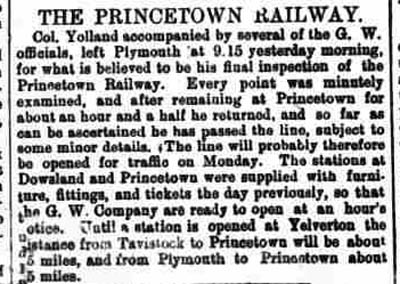
The Princetown Railway, operated by the Great Western Railway Company, commenced operations on Saturday, August 11th, 1883. This arrangement continued until January 1st, 1922, when the Great Western Railway Company formally took over the Princetown Railway Company.
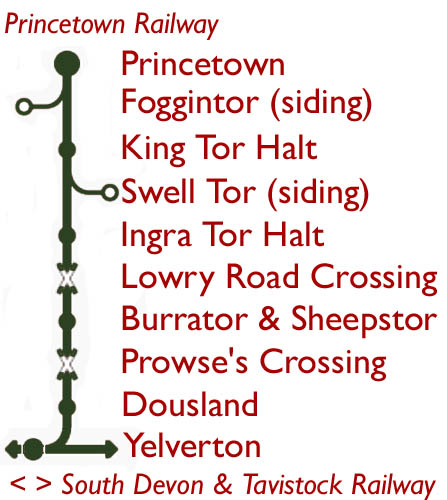
During this period, Yelverton Station served as the terminus of the Princetown Railway, situated on the Plymouth to Tavistock and Launceston Branch.
Apart from Yelverton, there were only two other stations along the line: Dousland and Princetown.
To accommodate goods traffic, sidings were established at Walkhampton Common (later renamed Eggworthy Siding), Swell Tor Sidings, and Royal Oak Siding. Since Yelverton lacked the necessary facilities, all goods traffic continued through to Horrabridge Station.
The initial locomotives employed on the Princetown Branch in 1883 were two 0-6-0 tanks manufactured by Messrs Sharp, Stewart and Company of Manchester in 1865. These locomotives had previously operated under the Llynvi and Ogmore Railway Company at Porthcawl, Glamorganshire, before being acquired by the Great Western Railway Company and assigned the numbers 919 and 923. It remains unclear whether both locomotives were stationed at Princetown Engine Shed and the specific reasons behind allocating two locomotives to the Branch. Number 923 was withdrawn in June 1888, followed by number 919 in June 1892.
Subsequently, the 517 class of 0-4-2 tanks, represented by numbers 561 and 563, replaced the withdrawn locomotives. These locomotives, built in 1869, were already two decades old when they arrived on the Princetown Branch. They were later succeeded by two other locomotives from the 850 class of 0-6-0 saddle tanks, numbers 990 and 992, dating from 1875-76.
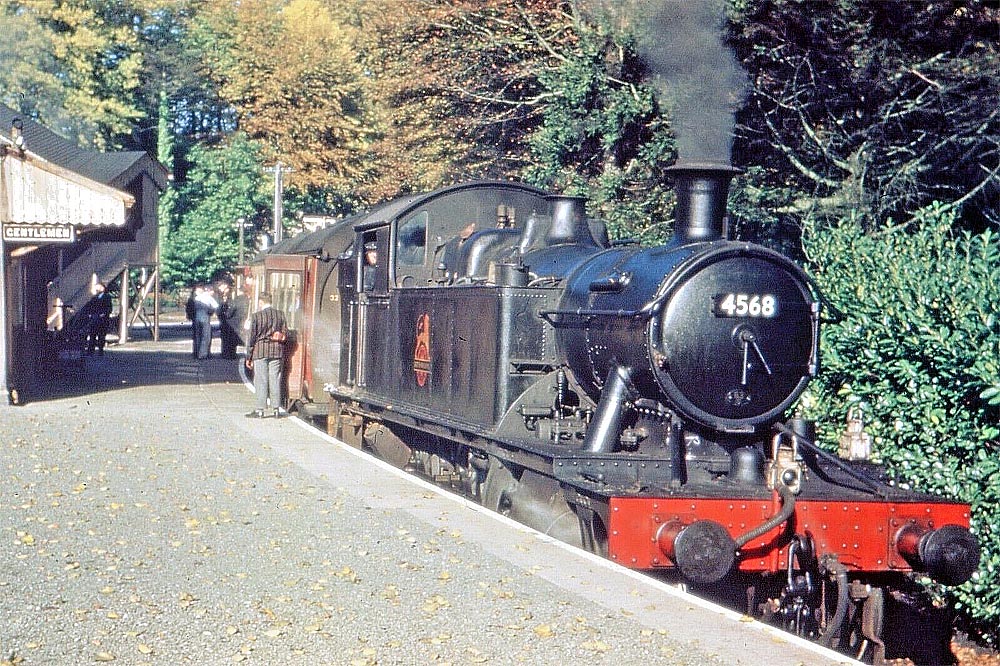
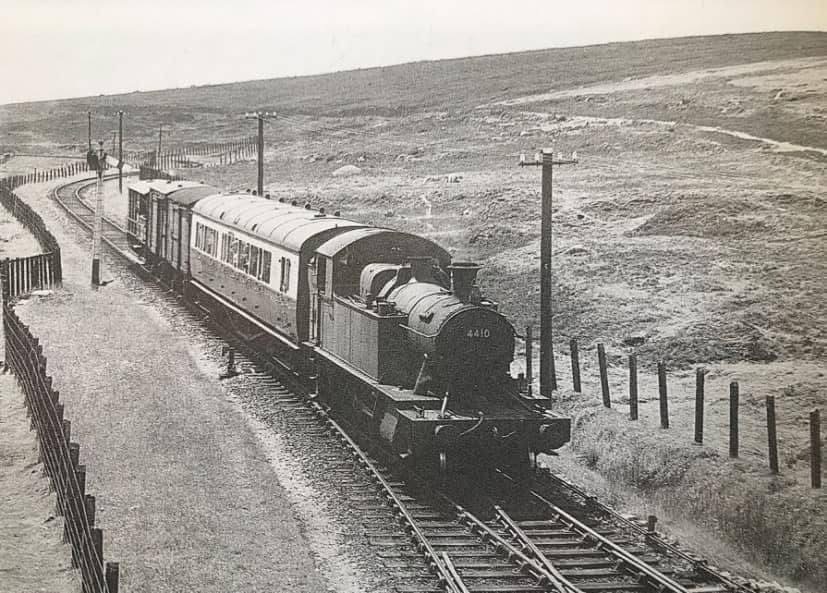
In 1905-06, a new 2-6-2 tank locomotive, designed specifically for the hilly routes of the West Country, was introduced. Initially known as the 3101 class, they were subsequently renamed the 4400 class. While the precise date of the first appearance of these locomotives on the Princetown Branch is undocumented, numbers 4400, 4401, 4402, 4406, 4407, and 4410 have been mentioned as engines utilised on the Branch between then and September 1955, when they were replaced by locomotives of the 4500 class.
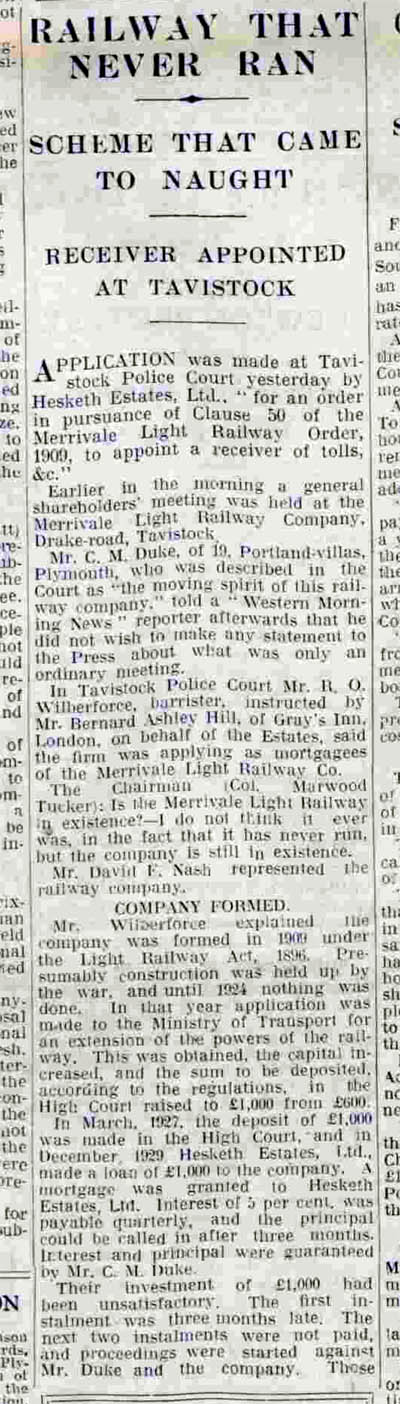
In 1909, discussions surrounding a proposed light railway between King’s Tor and Merrivale Quarry began, but the plan failed to materialise. However, on Monday, February 4th, 1924, Burrator and Sheepstor Platform was inaugurated to facilitate the transportation of workers involved in the construction of the Burrator and Sheepstor Dams (see here).
From Monday, May 18th, 1925, Burrator and Sheepstor Platform was made accessible to the general public, with train services operating exclusively during daylight hours. Around 1923/24, the Royal Oak Siding was removed.
After a fourteen-year hiatus, Sunday services were reintroduced on the Branch from Sunday, July 18th, 1926, limited to the summer holiday months.
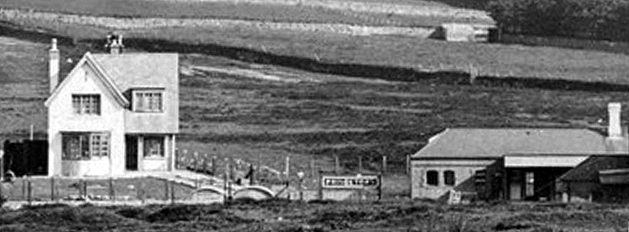
Princetown Station had the reputation of being the highest railway station in England, at almost 1373 feet. It was regarded as one of the most attractive lines in England, but scenic moorland beauty and Victorian tourism potential could never sustain the service. The line had a history of low passenger numbers. More than sixty years after the closure many look back on the service with affection – some even argue that had it been sold as an independent business concern it could well be alive today as a Dartmoor attraction.
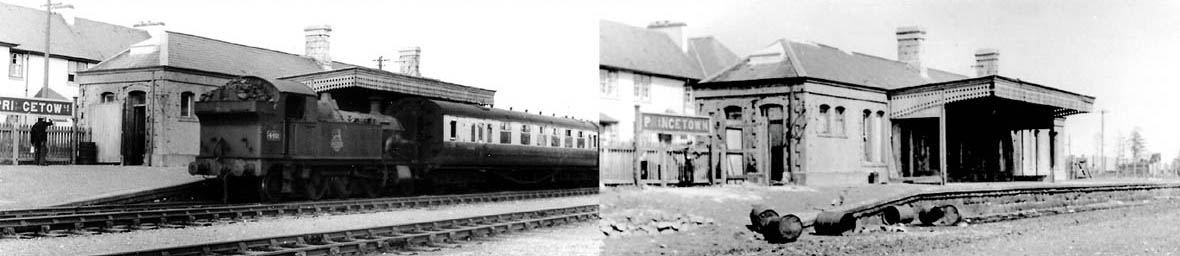
“In September 1956 a plan for raising funds to purchase the Princetown line with a view to re-opening was considered by Lydford Parish Council, the authority controlling the Forest of Dartmoor, but this met with little response and the matter soon dropped” (source: ‘The Tavistock, Launceston and Princetown Railways’. G.H. Anthony 1971).
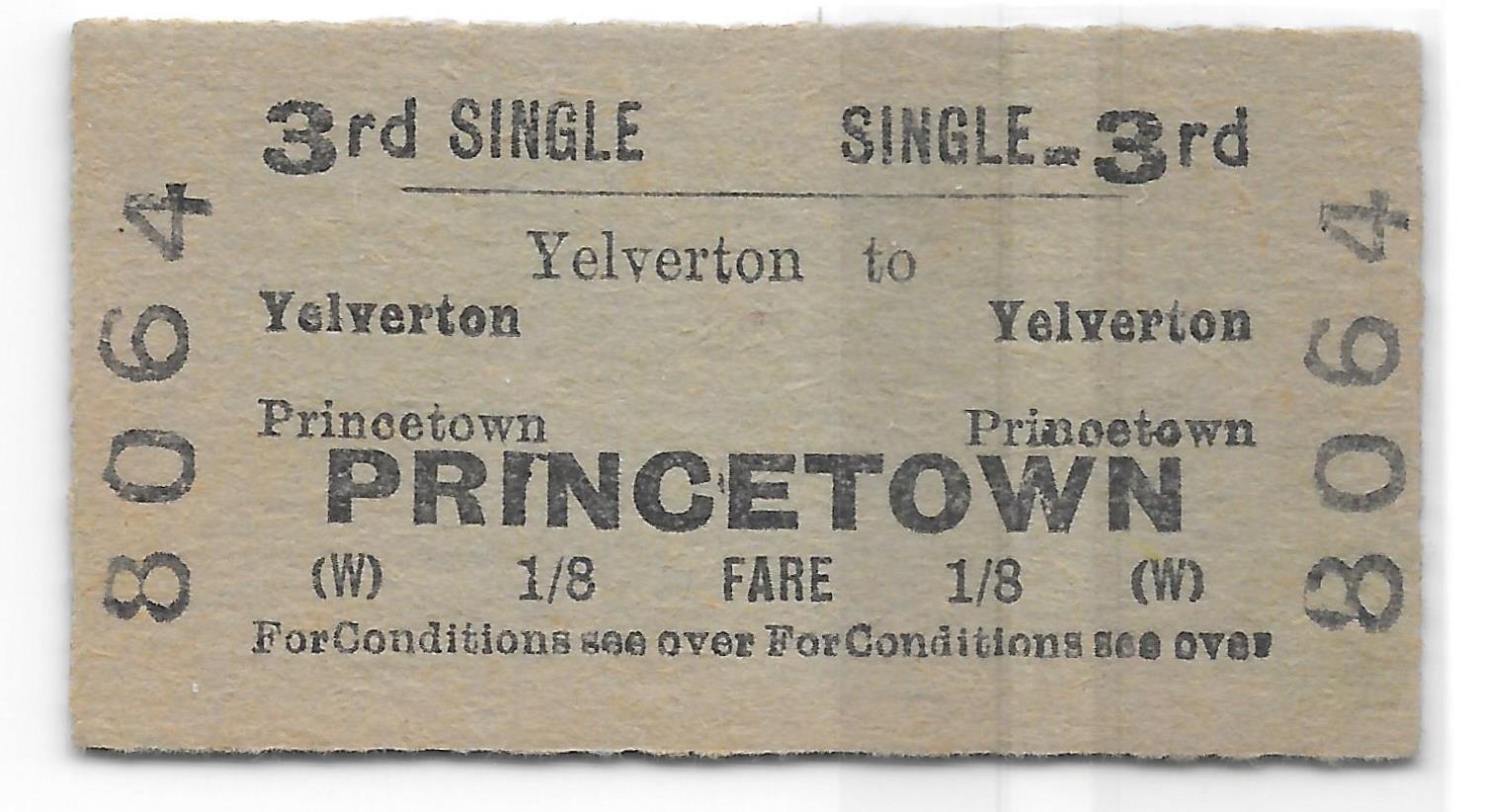
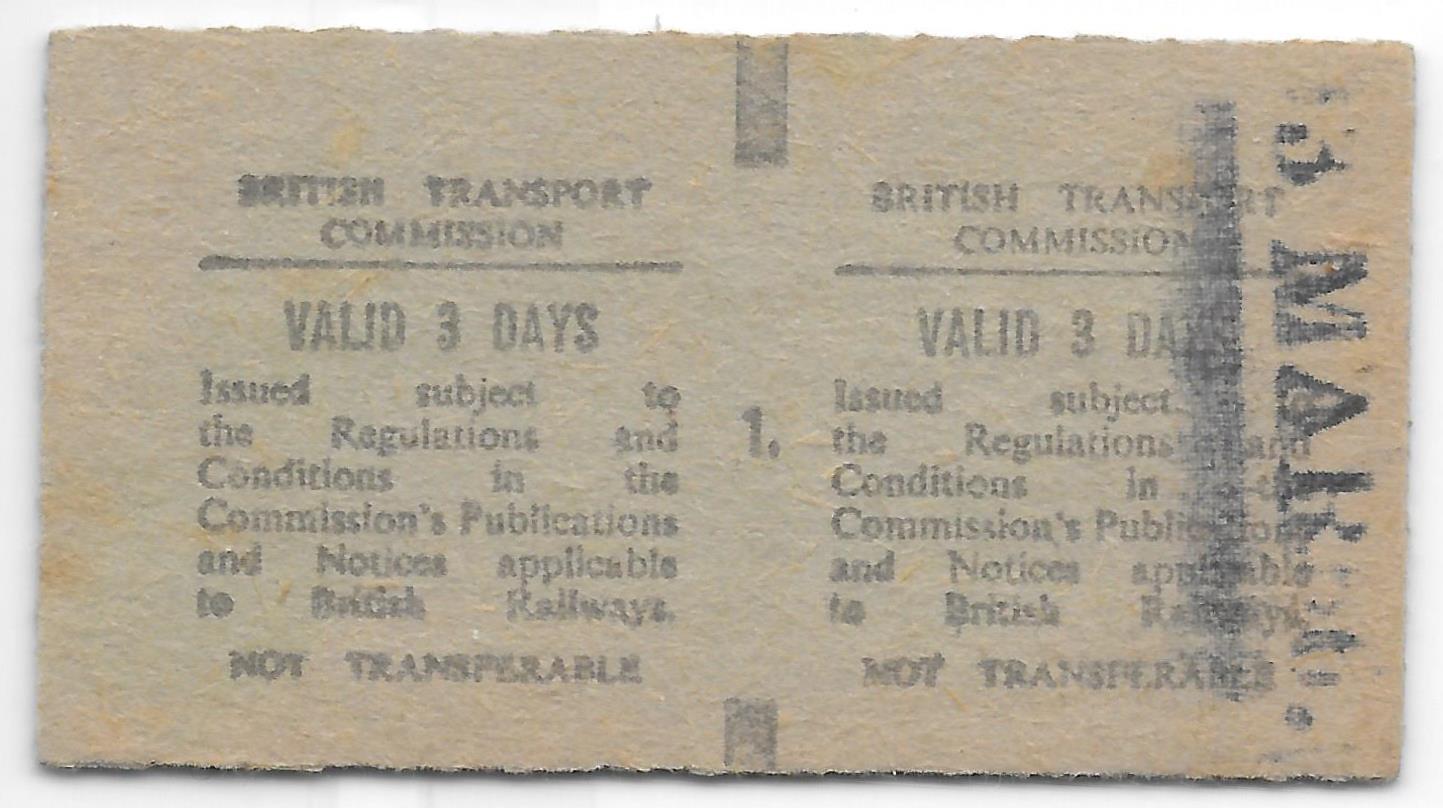
Subsequently, it has been asserted that had an individual come forward with approximately £25,000 during that time, they could have acquired the entire railway line along with its buildings. Sadly, the railway preservation movement was still in its nascent stage, and no one comprehended the potential of safeguarding one of Britain’s most breath-taking railway journeys.
Significantly, a proposal emerged in the months of August and September 1956, spearheaded by a certain Mr P. Morshead and receiving support from Lydford Parish Council. The proposal aimed to purchase the track, re-lay it to a narrow gauge, and employ three narrow gauge tank locomotives to operate trains between Yelverton Station and Dousland Station. The intention was to generate revenue that could be used to reopen the remaining stretch of the railway line.
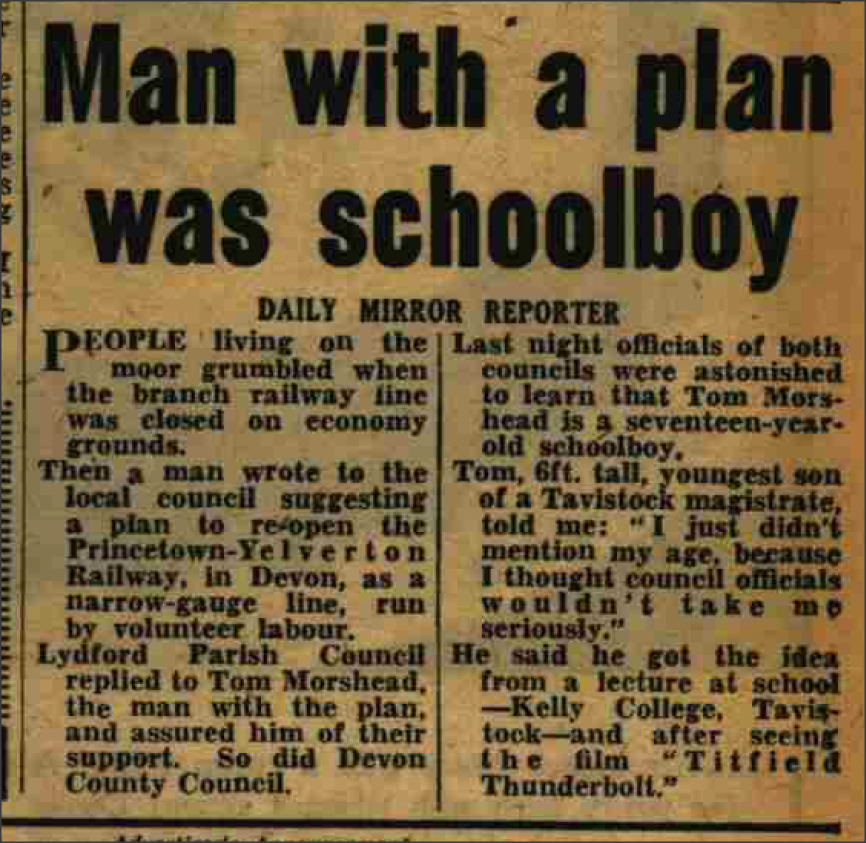
It turned out that the proposal came from 17 year-old Tom Morshead, a pupil at nearby Kelly College.
Man with a plan was schoolboy
DAILY MIRROR REPORTER
PEOPLE living on the moor grumbled when the branch railway line was closed on economy grounds. Then a man wrote to the local council suggesting a plan to reopen the Princetown-Yelverton Railway. in Devon, as a narrow-gauge line, run by volunteer labour.
Lydford Parish Council replied to Tom Morshead, the man with the plan, and assured him of their support. So did Devon County Council.
Last night officials of both councils were astonished to learn that Tom Morhead is a seventeen-year- old schoolboy.
Tom, 6ft. tall, youngest son of a Tavistock magistrate, told me: ” I just didn’t mention my age, because I thought council officials wouldn’t take me seriously.” He said be got the idea from a lecture at school —Kelly College, Tavistock—and after seeing the film “Titfield Thunderbolt.”
Riding The Rails: Exploring Dartmoor From Yelverton To Princetown
A highly informative DVD, produced by Aarchive Films, called ‘Yelverton to Princetown, Rails Across The Moor’. It includes old footage of the line and recollections of those who remember this beautiful railway branch. Details here.
Old British News is an independent historical newspaper archive and research service covering British news from 1750 to 1950.
Research, archive searching and identification work are provided free of charge. The first identified newspaper article is also supplied free.
If further relevant articles are identified, you may choose to receive the complete additional set for a single flat-rate payment of £6. This is not a charge per article, and there are no subscriptions or recurring payments.
Visit Old British News to submit a research request.